AEC AI Adoption Strategy: Tracking RONI Over Early Dollar ROI
Enterprise AI · AEC industry
In an AEC Business podcast interview, AI strategist Sam Zolfagharian argued that evaluating AI investments by financial ROI within one to two years is premature. She highlighted Wade Trim's metric of RONI (Risk of Not Investing) and outlined a three-stage adoption framework: inception, integration, and transformation.
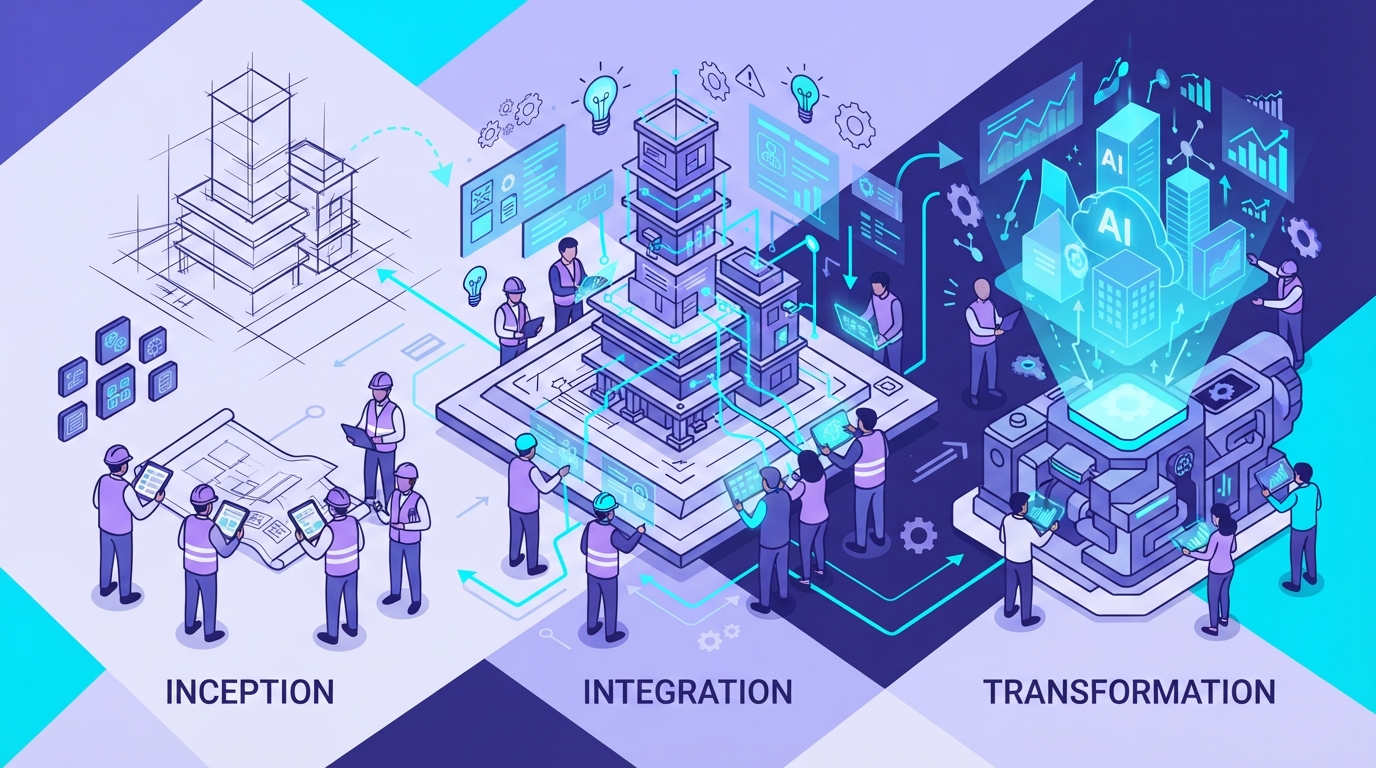
During an interview on the AEC Business Podcast, AI strategist Sam Zolfagharian discussed practical frameworks for measuring enterprise AI adoption in architecture and engineering firms. She argued that demanding dollar-based return on investment (ROI) within the first one to two years misjudges transformational technology, suggesting a realistic payback horizon of three to five years. Engineering firm Wade Trim tracks RONI (Risk of Not Investing) to weigh implementation expenses against the cost of falling behind competitors. Zolfagharian outlined a three-stage metric progression. The inception stage tracks license counts and tool activity. The integration stage shifts focus to the proportion of workflows altered, avoiding instances where tools are used merely to repeat old processes. The transformation stage is where monetary ROI, new service offerings, and new business models are measured. She also advised against attempting comprehensive data warehouse projects upfront, recommending that firms instead clean only the data required for specific use cases.
Key takeaways
- AI strategist Sam Zolfagharian stated that asking for monetary ROI within one or two years is premature, with realistic payback horizons spanning three to five years.
- Engineering firm Wade Trim tracks RONI (Risk of Not Investing) to balance initial implementation costs against the operational risks of competitor advancement.
- Metrics progress across three stages: inception monitors activity, integration measures workflow changes, and transformation evaluates monetary ROI, new services, and new business models.
- Firms were cautioned against building costly general data warehouses upfront; the recommended alternative is cleaning data incrementally around specific use cases.
Source:AEC Business Read the original ↗
Prepared, checked and automatically published by AI; not individually reviewed by a human.