Chinese Robotics Industry Shifts Toward Embodied AI Models and Manipulation Data
Frontier AI models · AI assistants
Media reports and industry data indicate that China's robotics competition is moving from hardware mobility to AI models for environment understanding. Companies are deploying human demonstrations, wearable sensors, and simulations to gather physical interaction data. While targeted pilot successes exist, industry experts note that general, reliable deployment in daily operations will still take years.
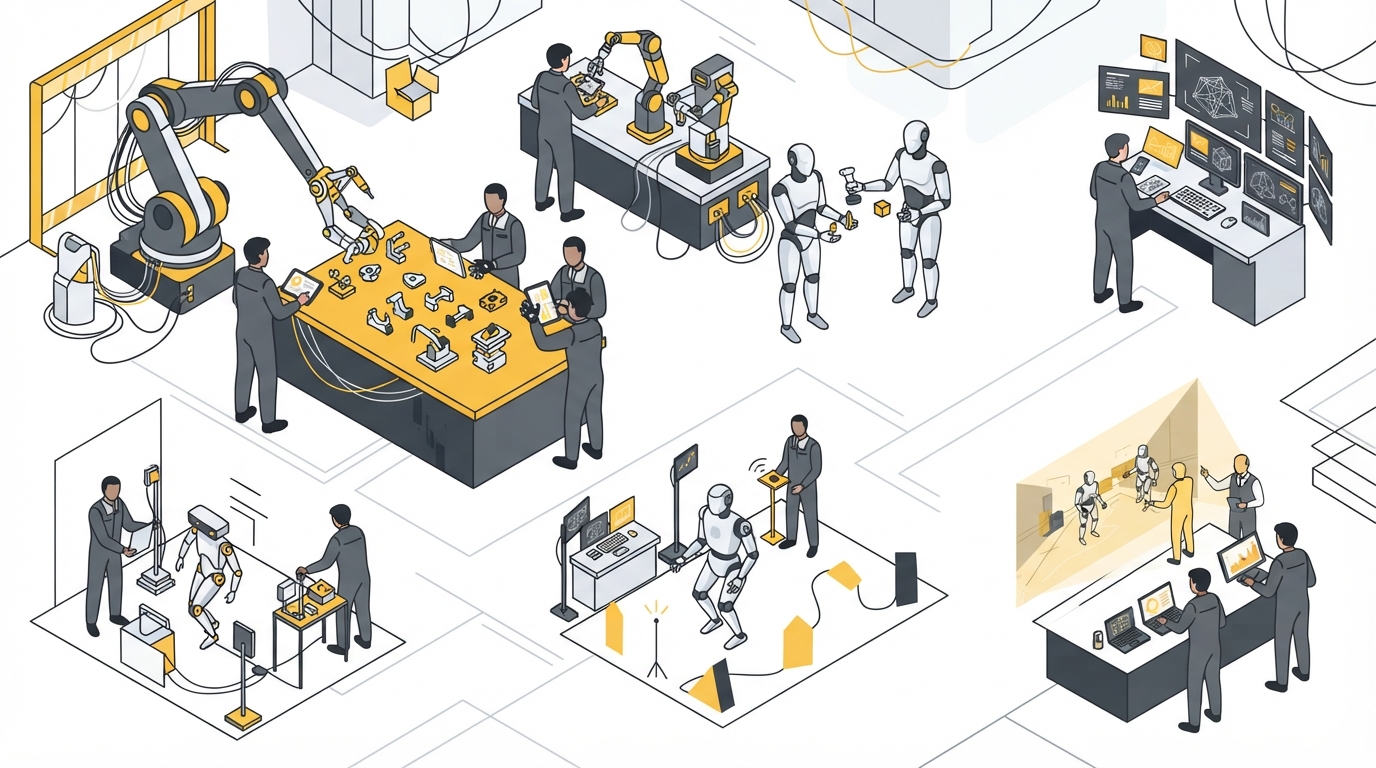
According to media reports, Chinese robotics developers are shifting their primary focus from physical mobility demonstrations to developing AI brains capable of understanding physical surroundings and learning tasks. Amid hardware pricing pressure, companies view software and foundational models as key value drivers. To address the scarcity of manipulation training data, firms are combining human demonstrations, wearable sensing, and simulation environments, prompting specialized data platform startups to emerge. Despite promising trials in battery assembly and pharmacy order processing, achieving robust cross-domain autonomy remains a multi-year challenge.
Key takeaways
- Robotics R&D in China is pivoting toward environmental understanding and task adaptation, moving beyond rigid preprogrammed motions.
- To overcome physical training data shortages, developers collect real-world manipulation data via human demonstrations and wearable sensors alongside simulations.
- Industry advisors note that demonstrating novel tasks differs vastly from reliable everyday operations, which will likely require years of maturation.
Source:科技報橘 Read the original ↗
Prepared, checked and automatically published by AI; not individually reviewed by a human. Translation checked by AI.