Engineering Analysis of Tainan Desalination Plant: Marine Works, Dual-Tier Pipelines, and Two-Stage RO Design
Construction methods · AEC industry
Phase 1 of the Tainan Desalination Plant targets 100,000 m3/day of water production with civil structures built for the full 200,000 m3/day capacity. The engineering team details key solutions including caisson intake, trenchless jacking across intertidal zones, vertical dual-tier pipelines in narrow seawall corridors, and energy recovery devices for RO units.
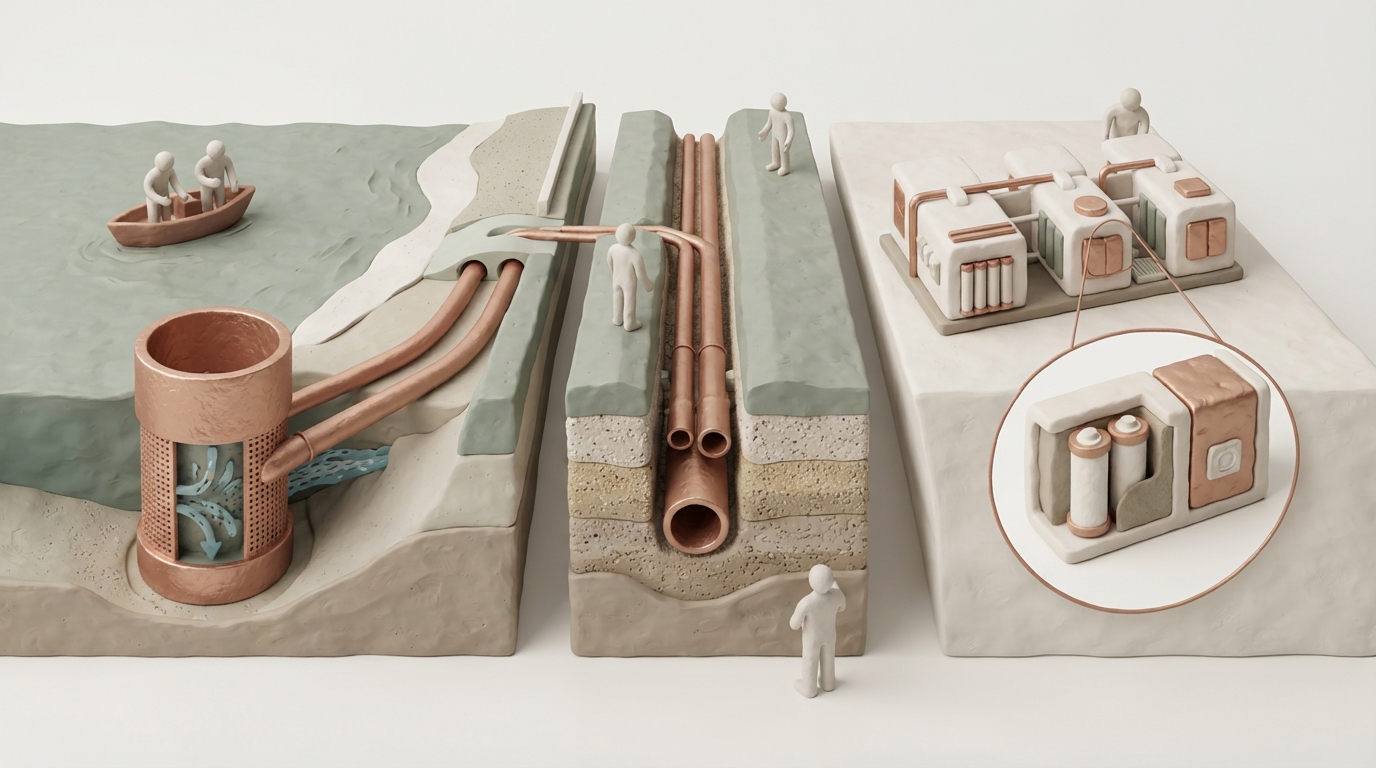
Sponsored by the Southern Region Water Resources Branch of the Water Resources Agency, the Tainan Desalination Plant EPC project covers around 17 hectares in Jiangjun District, Tainan City. Phase 1 targets an output of 100,000 cubic meters per day, while civil structures are built for the full 200,000 cubic meters per day capacity. The project consists of offshore marine works, onshore piping, and desalination treatment facilities. Marine works adopt a caisson intake designed with enlarged inflow area to lower intake velocity, trenchless pipe jacking across seawalls and intertidal zones, and hydraulically balanced diffuser ports for discharge. The onshore pipeline route faces narrow seawall road widths of only 4 to 5 meters and silty sand ground conditions, resolved through a vertical dual-tier pipe arrangement and a water-filled sinking pipe method. Inside the plant, the two-stage reverse osmosis system integrates energy recovery devices with no less than 95% efficiency to curb power demand.
Key takeaways
- Marine works adopt a vertical caisson intake with enlarged inflow area to reduce velocity, utilizing trenchless jacking across intertidal zones and seawalls.
- Onshore pipelines counter narrow corridors and silty sand groundwater challenges through an intake-under-discharge vertical configuration and underwater excavation sinking pipe installation.
- Crossing the North Channel utilizes a large circular jacking pit executing simultaneous horizontal intake and sloped outfall jacking using interior-thickened single-layer steel pipes.
- Plant RO units feature a two-stage layout with at least 20% backup capacity and no less than 95% energy recovery efficiency, complemented by mineralizing beds.
Source:中國土木水利工程學會|土木水利 Read the original ↗
Prepared, checked and automatically published by AI; not individually reviewed by a human. Translation checked by AI.