Google Prototype Satellite Boots TPU and Runs Gemma 4 Model in Orbit
Frontier AI models
Google announced a milestone for Project Suncatcher. A prototype satellite launched on October 1 successfully booted its onboard TPU and ran the Gemma 4 model to generate a haiku sent back to Earth. The initiative explores orbital AI computing, with upcoming tests on heat stress and radiation ahead of launching interconnected satellites in 2027.
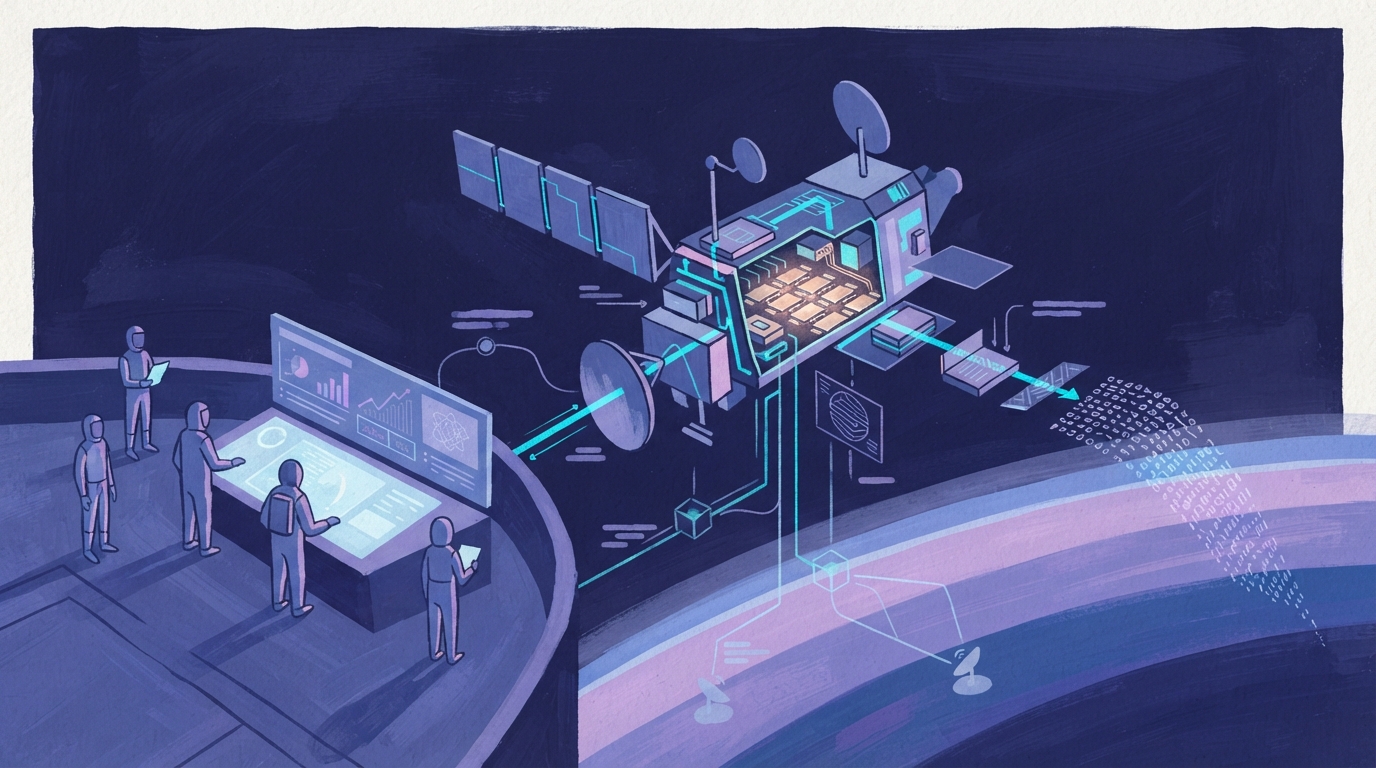
Google announced progress in its Project Suncatcher space AI research. Following post-launch calibration from an October 1 launch, the prototype satellite successfully powered its onboard TPU. Ground stations uploaded prompts to the Gemma 4 open model, which generated a space haiku transmitted while passing over Svalbard, Norway. Google stated this marks the first time its data-center TPU generated an AI response in orbit, followed by telemetry prompt tests. Google CEO Sundar Pichai stated that the full workflow of command uplink, hardware boot, model inference, and downlink reception was verified. Next phases will test the chip under thermal stress and radiation, aiming to launch interconnected satellites in 2027. The report noted that while orbital facilities may ease terrestrial power and land constraints, high launch costs and heat dissipation remain major hurdles.
Key takeaways
- Google's prototype satellite successfully booted an onboard TPU and ran Gemma 4 inference in orbit.
- The test validated the complete workflow of command uplink, TPU boot, model execution, and downlink reception.
- Google plans to evaluate thermal stress and radiation resilience, aiming to launch interconnected satellites in 2027.
Source:INSIDE Read the original ↗
Prepared, checked and automatically published by AI; not individually reviewed by a human. Translation checked by AI.