Microsoft Research Studies Offloaded Physical AI Inference for Mobile Robots
Frontier AI models · AI assistants · Enterprise AI
Microsoft Research evaluated physical AI workloads in mobile manipulation, showing that offloading compute to edge or cloud GPUs improves success rates and extends battery life.
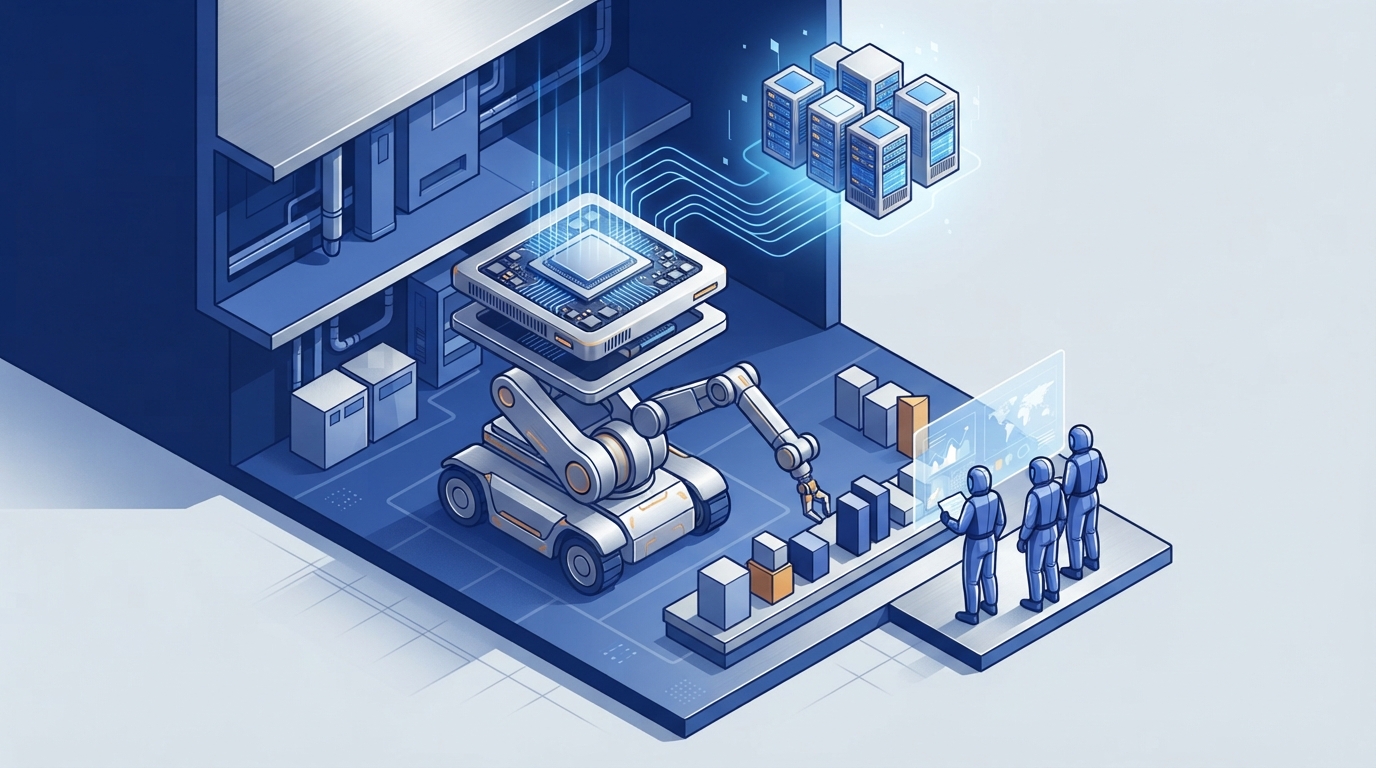
Microsoft Research evaluated mobile robotic manipulation tasks to assess the limitations of running AI inference solely on onboard robot GPUs. Researchers found that heavy onboard hardware drains battery and constrains model complexity, while offloading computation to edge or cloud GPUs significantly improved accuracy and operating duration. Alongside this study, Microsoft integrated Kubernetes-based distributed inference capabilities into its open-source Physical AI Toolchain.
Key takeaways
- Tests showed smaller onboard GPUs slowed mapping and planning by up to 383% compared to an A100, while larger onboard GPUs drained batteries by up to 160%.
- Offloading inference to edge or cloud GPUs improved task success rates and obstacle detection in mobile manipulation workloads.
- Microsoft released a Kubernetes-based toolset within the Physical AI Toolchain to orchestrate containerized robotics workloads across robots, edge, and cloud.
Source:Microsoft Read the original ↗
Prepared, checked and automatically published by AI; not individually reviewed by a human.