Operation and Water Resource Dispatch of Brackish Water Desalination at Penghu Chikan Groundwater Reservoir
Smart operations · AEC industry
Taiwan Water Corporation and Li-Ming Engineering analyzed the operation of Penghu's Chikan Groundwater Reservoir and Baisha Brackish Desalination Plant. Facing seawater salinization, the facility treats brackish water via reverse osmosis (BWRO) and is transitioning to an aquifer replenishment and backup supply role alongside an upcoming cross-regional transmission pipeline.
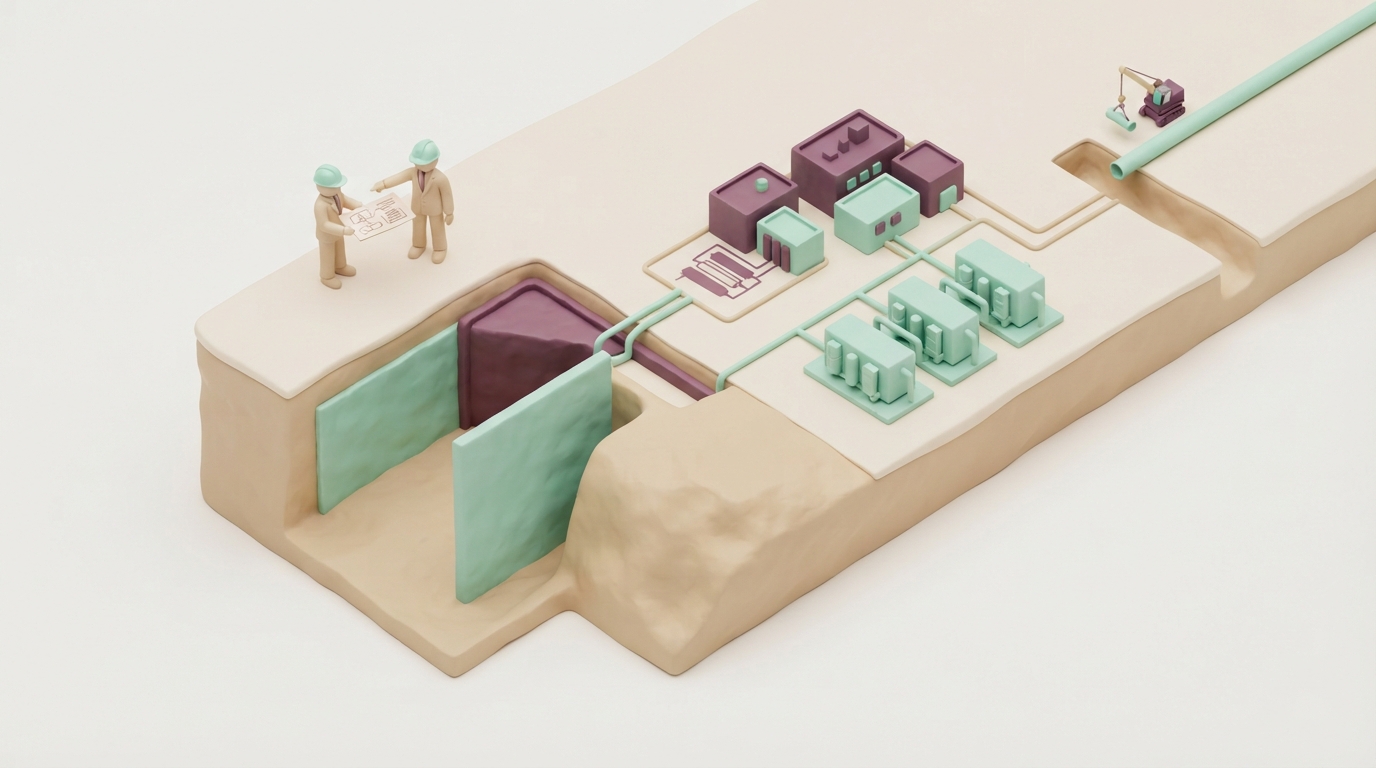
The Chikan Groundwater Reservoir in Penghu is Taiwan's sole facility utilizing a bentonite diaphragm cut-off wall to impound groundwater. In service since ROC Year 75, coastal proximity has caused continuous seawater intrusion and salinization, driving up total dissolved solids and chloride levels. To support Baisha Township, the Baisha Brackish Desalination Plant was commissioned in ROC Year 92, operating three Brackish Water Reverse Osmosis (BWRO) units with a total design capacity of 1,800 CMD at lower operating pressures than seawater RO. Historical records indicate the reservoir once contributed 19% to 46% of Baisha's water supply, peaking in ROC Year 108 before yield decreased due to worsening salinization and equipment downtime. With the ongoing pipeline and monitoring project connecting Chenggong to Baisha, the system is transitioning to cross-regional water dispatch, redefining the reservoir as an asset for aquifer recharge, restoration, and emergency backup.
Key takeaways
- Chikan Groundwater Reservoir features a bentonite cut-off wall 0.55 m wide, 820 m long, and up to 25 m deep, representing Taiwan's only cut-off wall groundwater reservoir with a design effective capacity of 1,278,000 m³.
- The Baisha plant applies rapid filtration, coagulation, and microfiltration (MF) to achieve a silt density index (SDI) below 3 before water enters three BWRO units, yielding about 500 CMD per unit with a 76.9% recovery rate.
- Due to seawater intrusion, the reservoir's share of Baisha supply fell from a 46% peak in ROC Year 108 to 19% in ROC Year 112, pausing output during ROC Years 113 to 114 due to feedstock deficit and equipment shutdown.
- With the Chenggong–Baisha pipeline scheduled for completion in ROC Year 115, regional dispatch will be introduced, shifting the reservoir's role to aquifer recharge, restoration, and emergency backup supply.
Source:中國土木水利工程學會|土木水利 Read the original ↗
Prepared, checked and automatically published by AI; not individually reviewed by a human. Translation checked by AI.