Qt Launches Clate Beta: AI-Native No-Code UX Tool for Embedded HMI
AI assistants · AI coding
Qt has released Clate Beta, a free no-code UX design tool tailored for embedded and HMI applications. Built to generate working QML code, Clate integrates AI assistance through Anthropic's Claude and features a local Model Context Protocol server. The tool aims to bridge the gap between design mockups and real device execution, with a full commercial release slated for summer 2027.
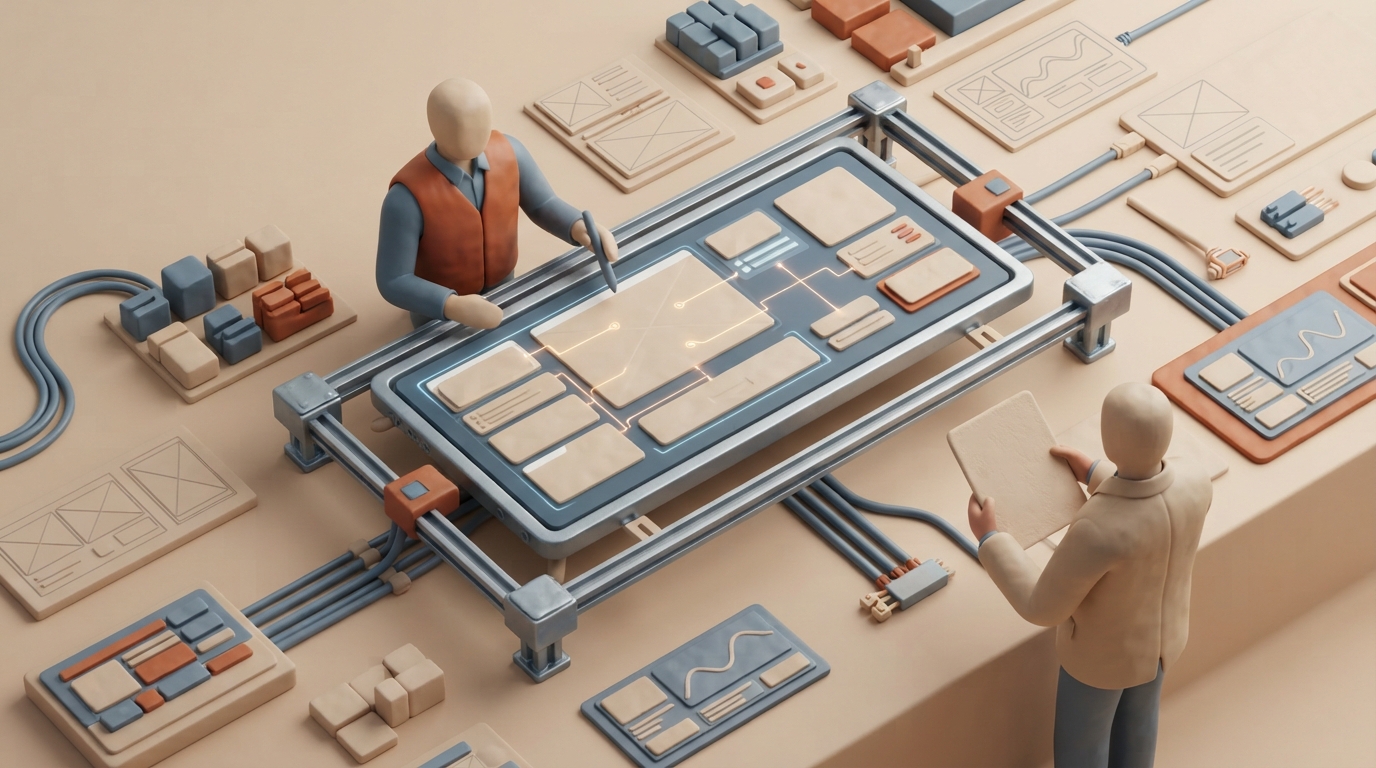
Qt announced the beta release of Clate, a no-code, AI-native UX design platform specifically engineered for embedded devices and human-machine interface (HMI) applications. Unlike standard design tools focused primarily on web and mobile interfaces, Clate produces declarative QML code under the hood, enabling engineering teams to build directly from design assets rather than recreating them from static prototypes. The beta release provides an infinite canvas workspace, asset libraries, property editing, and multi-file management. Clate incorporates an AI Assistant connected via the Agent Client Protocol (ACP), launching with support for Anthropic's Claude to generate screens and interface components from natural language prompts. It also embeds a local Model Context Protocol (MCP) server, allowing teams to connect custom AI agents into the design workflow. According to Qt, Clate is aimed at resolving common handoff friction in embedded development, where designs often struggle with hardware resource limitations or lack direct code export. Qt plans to release variable binding later in 2026, followed by design systems, screen flow graphs, and collaboration features ahead of a full commercial rollout scheduled for summer 2027.
Key takeaways
- Clate Beta is released as a free no-code UX tool that directly outputs working QML declarative code for embedded and HMI hardware.
- Integrated AI features support natural language interface generation via Anthropic's Claude and provide a local Model Context Protocol (MCP) server for custom agent workflows.
- Qt aims to address embedded UI challenges where web-focused design mockups fail to account for device rendering limits or lack code export.
- The full commercial launch is scheduled for summer 2027, with planned updates including data bindings, screen flow graphs, and real-time collaboration.
Source:www.qt.io Read the original ↗
Prepared, checked and automatically published by AI; not individually reviewed by a human.