OSHA Recognizes Exemplary Local Exhaust Ventilation Designs for Workplace Hazard Control
MEP · Project management · AEC industry
Taiwan's Occupational Safety and Health Administration held its first exemplary local exhaust ventilation design competition, awarding 7 projects covering organic solvents, dust, high-temperature fumes, and boiler room ventilation to highlight engineered hazard control.
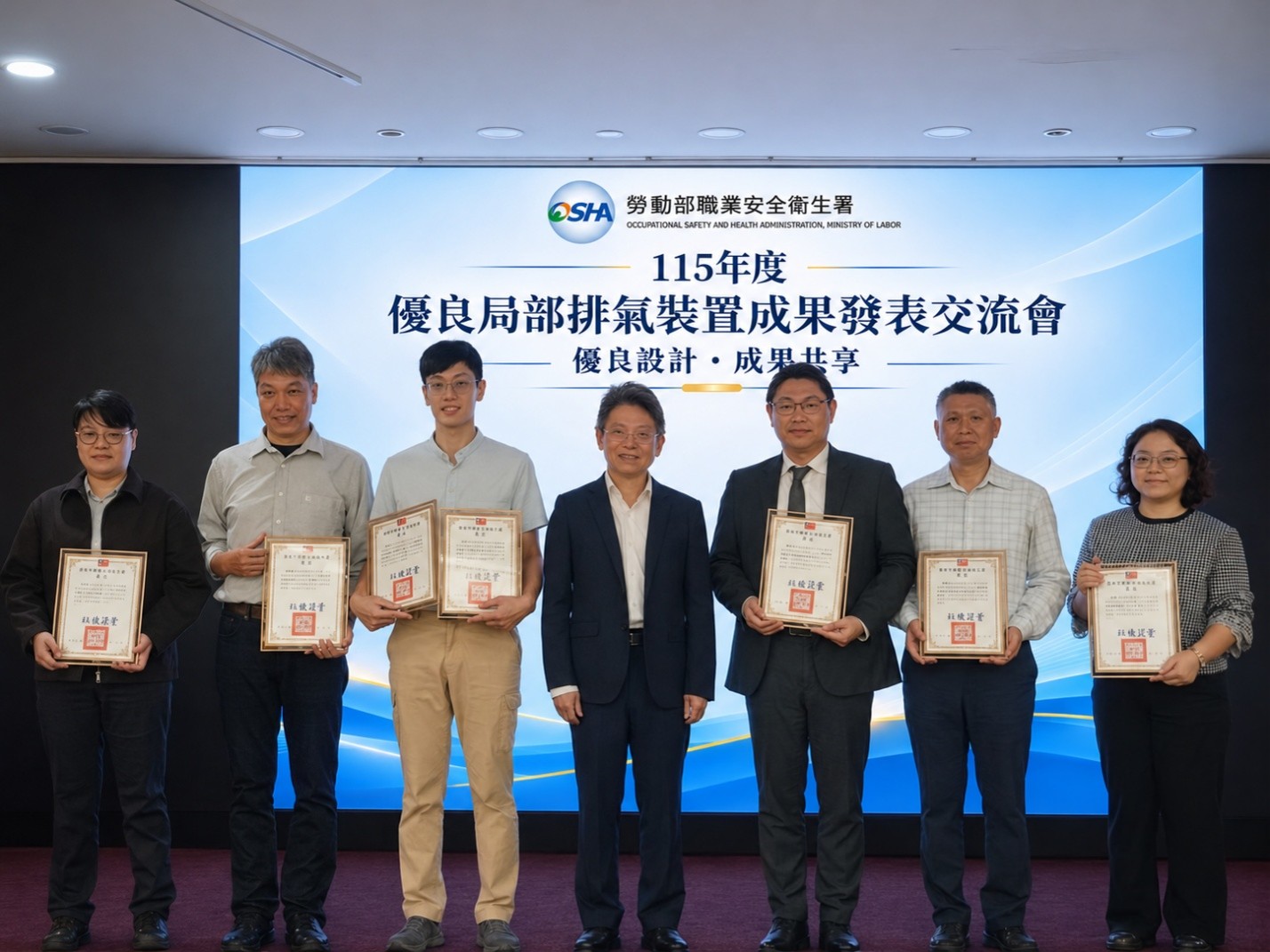
Taiwan's Occupational Safety and Health Administration (OSHA) held an award ceremony and exchange conference at the NTU Alumni Hall for its inaugural competition honoring exemplary local exhaust ventilation designs. A total of seven projects received awards—comprising two top excellence, three excellence, and two honorable mention awards—covering work environments involving organic solvent vapors, industrial dust, high-temperature fumes, and boiler room ventilation. OSHA noted that effective hazard mitigation relies on tailored engineering controls matched to pollutant behaviors alongside performance validation. Among the top-awarded projects, an operation handling methanol applied slot-type back-draft hoods with local enclosures, reducing methanol concentrations from 15.95 ppm to below 0.888 ppm. Another top design for boiler rooms implemented enclosed local ventilation around natural gas piping, operating at approximately 70 cubic meters per minute—about 14% of conventional dilution ventilation volume. Additionally, an improvement project on high-temperature furnaces relocated capture hoods closer to fume sources and downsized fan motor capacity to optimize energy efficiency. OSHA stated it will compile these engineering cases for future training and regulatory promotion.
Key takeaways
- OSHA recognized seven exemplary local exhaust designs across categories of solvent vapor, dust, and boiler ventilation.
- A top-rated methanol painting case lowered airborne levels to under 0.888 ppm using enclosure and slot hoods, while a boiler project trimmed ventilation airflow to 14% of general dilution requirements.
- A furnace capture hood repositioning improved fume capture while downsizing motor capacity, demonstrating combined hazard control and energy savings.
- OSHA stressed that engineered controls must be verified through performance testing, maintenance, and source-level management.
Source:職安署|新聞稿 Read the original ↗
Prepared, checked and automatically published by AI; not individually reviewed by a human. Translation checked by AI.