OpenAI Tests GPT-6 Astra for Hardware and Engineering Workflows with Mazda and CGR
Frontier AI models · AI assistants · Structures
OpenAI shared its progress in physical engineering, demonstrating that two team members designed a Codex test device with GPT-6 Astra in less than a week, followed by prototype fabrication. OpenAI also expanded collaborations with Mazda and Chip Ganassi Racing to test 3D scan-to-CAD conversion and aerodynamic simulations, noting that manufacturing constraints and tolerances still require multiple rounds of manual engineering review.
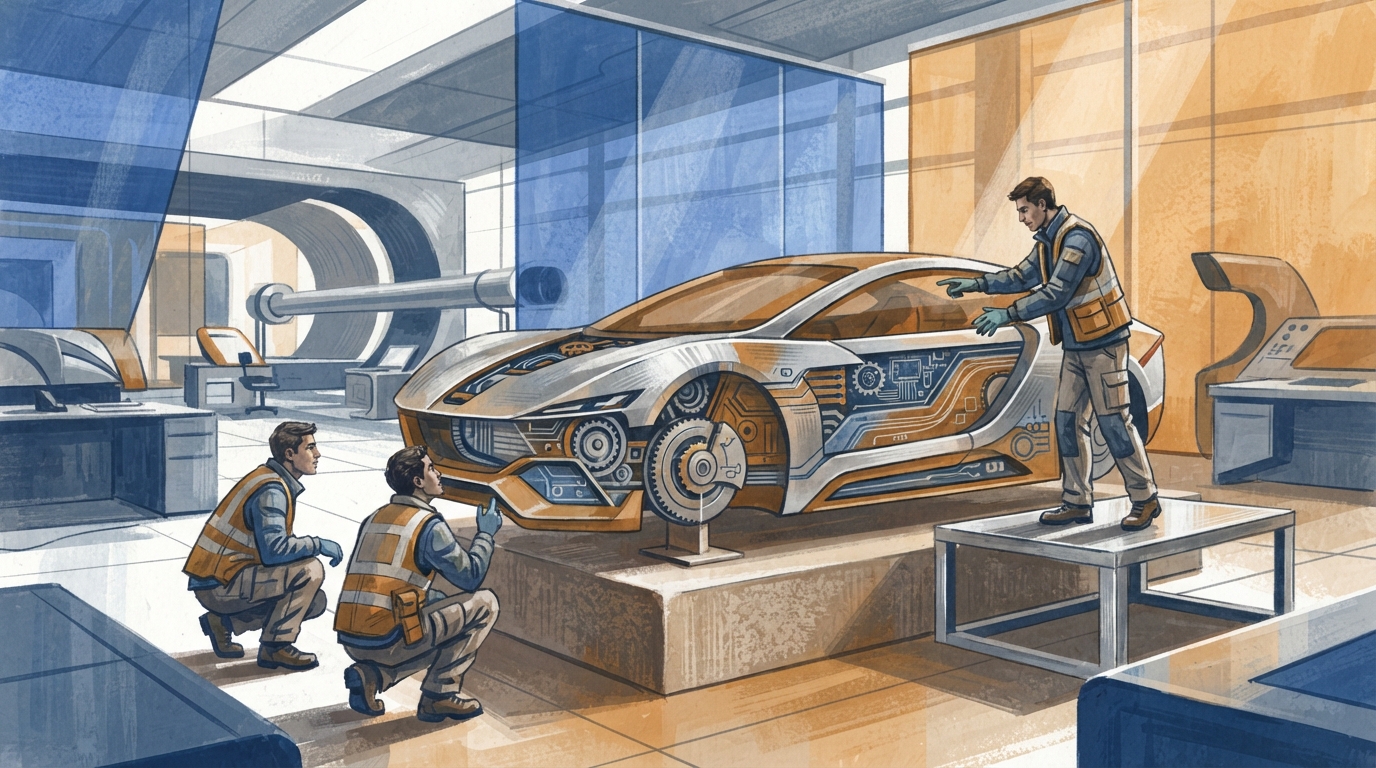
In November, OpenAI announced engineering workflow developments utilizing GPT-6 Astra and Codex. In a side project, team members used the model to design a Codex test device—encompassing enclosure mechanics, PCB component placement, and software integration—in under a week, after which a contract manufacturer produced a small batch of prototypes within a month. However, OpenAI noted that the model did not consistently account for manufacturing limits, tolerances, or assembly requirements, necessitating several rounds of human review prior to production. OpenAI also detailed enterprise pilot projects. The Chip Ganassi Racing team is testing workflows that convert 3D scans of physical parts into editable CAD models and 2D fabrication drawings. Simultaneously, OpenAI is collaborating with Mazda aerodynamics and crash engineers to explore vehicle front-end design variations and airflow simulations to reduce aerodynamic drag. OpenAI stated that hardware team model token usage has grown 23 times since February, noting this metric reflects usage scale rather than direct productivity gains. On the BenchCAD 2.0 evaluation—which measures geometry, part placement, and circuit connections without testing manufacturability—OpenAI reported an internal model scored 0.875, compared to 0.594 for GPT-6 Astra.
Key takeaways
- OpenAI used GPT-6 Astra to design the enclosure, PCB, and firmware for a hardware test device in under a week.
- OpenAI stated the model does not consistently handle manufacturing constraints, tolerances, and assembly details without manual review.
- CGR and Mazda are testing Codex and Astra for 3D scan-to-CAD conversion, aerodynamic simulation, and styling exploration.
- OpenAI hardware team token usage grew 23-fold, while an internal model scored 0.875 on BenchCAD 2.0, which excludes manufacturability.
Source:INSIDE Read the original ↗
Prepared, checked and automatically published by AI; not individually reviewed by a human. Translation checked by AI.