ITRI President Pei-Zen Chang Details Strategic Tech Investments in Cryogenic Electronics and Robotics
Enterprise AI
ITRI President Pei-Zen Chang outlined the institute's R&D resource allocation strategy. In quantum computing, ITRI focuses on cryogenic electronics needed across all architectures. For robotics and drones, it adopts systems engineering—mandating teams to interview at least 10 end users and capping key component costs at 30% of target prices using mass-produced chips. ITRI is also supporting AI adoption frameworks for SMEs.
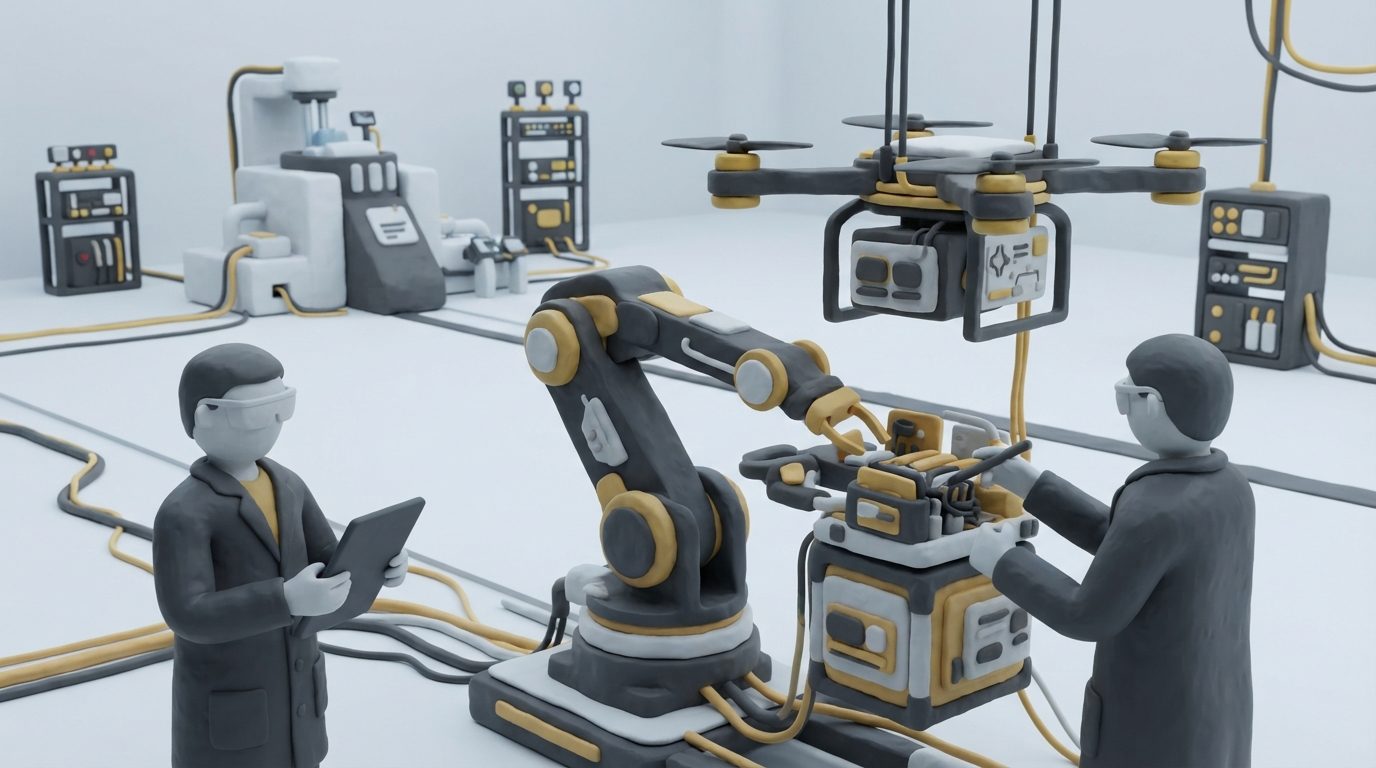
In an interview, ITRI President Pei-Zen Chang outlined ITRI's R&D strategy under constrained resources, categorizing technologies by competitive advantage, supply disruption risks, and non-red supply chain requirements. In quantum computing, rather than betting on specific qubit approaches, ITRI focuses on 4 K cryogenic electronics required across all architectures, aiming to become an indispensable partner in global supply chains. For robotics and drone programs, ITRI has transitioned to a systems engineering methodology. Chang mandates that project teams interview at least 10 end users to understand workflows and price sensitivity before defining specifications. ITRI also instituted a rule capping key component costs at 30% of the anticipated retail price. To avoid prohibitive non-recurring engineering (NRE) costs, teams prioritize domestically mass-produced mobile processors. Drone initiatives are centered on three shared platforms—high speed, heavy payload (70 kg single-unit lift), and long range (800 km target)—allowing transfer partners to focus on specific payloads. Additionally, ITRI is supporting Taiwan's Ministry of Economic Affairs in expanding AI adoption across various industries by developing standardized diagnostic assessment tools and shared software modules, partnering with IT service providers for broad enterprise rollout.
Key takeaways
- ITRI avoids betting on a single quantum computing architecture, concentrating efforts on 4 K cryogenic electronics essential to all paths.
- Robotics and drone projects adopt systems engineering, requiring interviews with at least 10 end users and capping key component costs at 30% of target prices.
- Drone development standardizes on three shared platforms (high-speed, 70 kg heavy lift, 800 km range) utilizing mass-produced chips to manage NRE costs.
- ITRI supports SME AI adoption initiatives by developing diagnostic assessment frameworks and modular tools for IT service partners.
Source:科技報橘 Read the original ↗
Prepared, checked and automatically published by AI; not individually reviewed by a human. Translation checked by AI.