ABRI Holds Seminar on Fire-Resistant Tech for Net-Zero Timber and Bamboo Construction
Low-carbon materials · AEC industry
To support Taiwan's 2050 net-zero goals, ABRI held a seminar on December 11, 2025, exploring carbon reduction benefits alongside fire and flame-retardant technologies for timber and bamboo structures, drawing over 60 registrants.
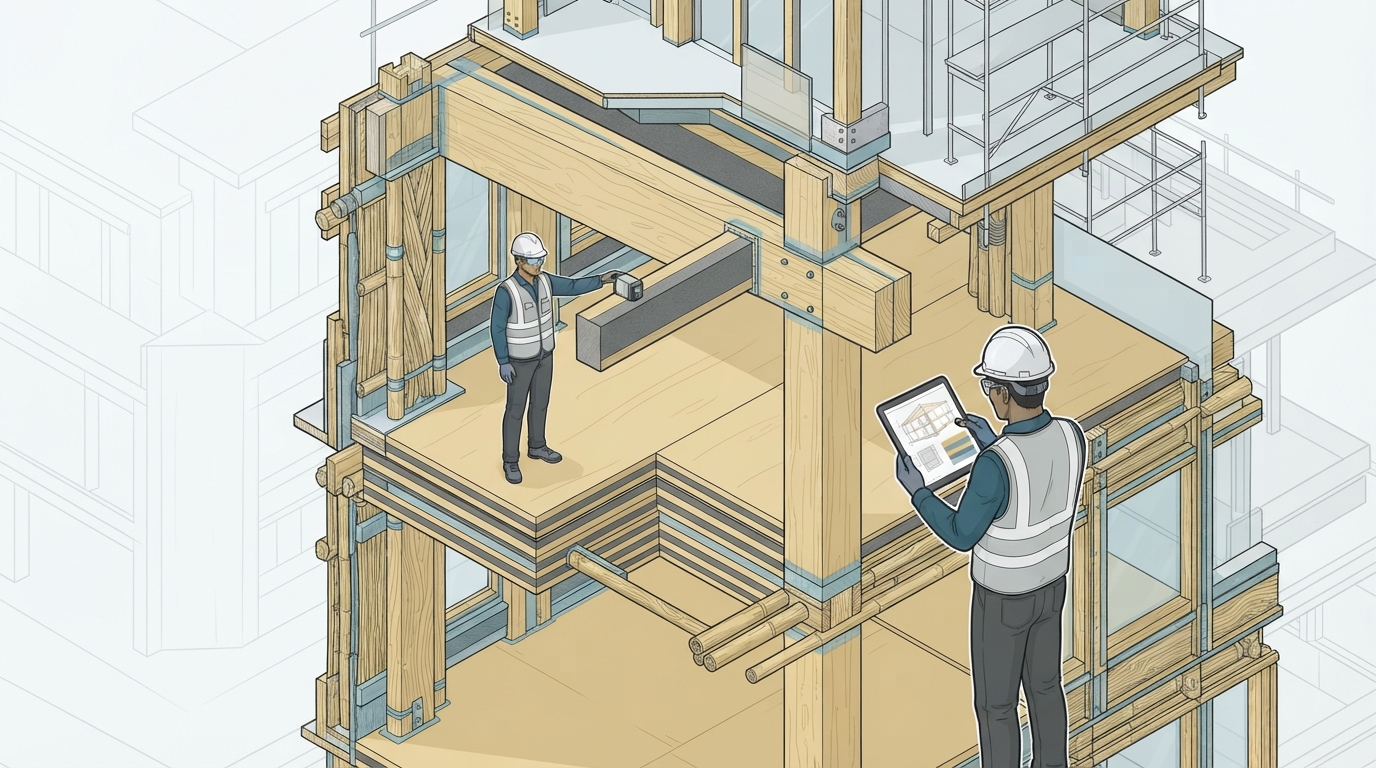
In response to international net-zero trends, Taiwan published its 2050 Net-Zero Emission Pathway in March 2022, targeting 100% of new buildings and over 85% of existing buildings to become nearly zero-carbon by 2050. Building decarbonization research focuses on energy efficiency, prefabrication, timber and bamboo construction, circular economy, and structural lifespan extension. ABRI hosted a seminar at the Dapinglin Joint Development Building on December 11, 2025, where experts discussed the decarbonization benefits, fire resistance, and flame-retardant applications of timber and bamboo structures, with over 60 attendees registered.
Key takeaways
- Taiwan's net-zero pathway aims for 100% of new buildings and over 85% of existing buildings to be nearly zero-carbon by 2050.
- Decarbonization R&D centers on energy efficiency, prefabrication, timber/bamboo construction, circularity, and building longevity.
- The seminar gathered experts to address carbon reduction benefits and fire/flame-retardant applications for timber and bamboo structures.
Source:內政部建築研究所|建築研究簡訊 Read the original ↗
Prepared, checked and automatically published by AI; not individually reviewed by a human. Translation checked by AI.