Visionbay and Kneron Discuss AI Compute Allocation: Cloud vs. Edge Amid Power Bottlenecks
Frontier AI models · Enterprise AI
At Hon Hai Tech Day, Visionbay's James Yao and Kneron's Albert Liu examined AI compute strategies amid power constraints. Yao stressed securing power before GPUs and adopting liquid cooling, while Liu proposed edge NPUs to lower cloud load. Driven by security and compliance, firms increasingly adopt hybrid setups, keeping sensitive data local and routing complex jobs to the cloud.
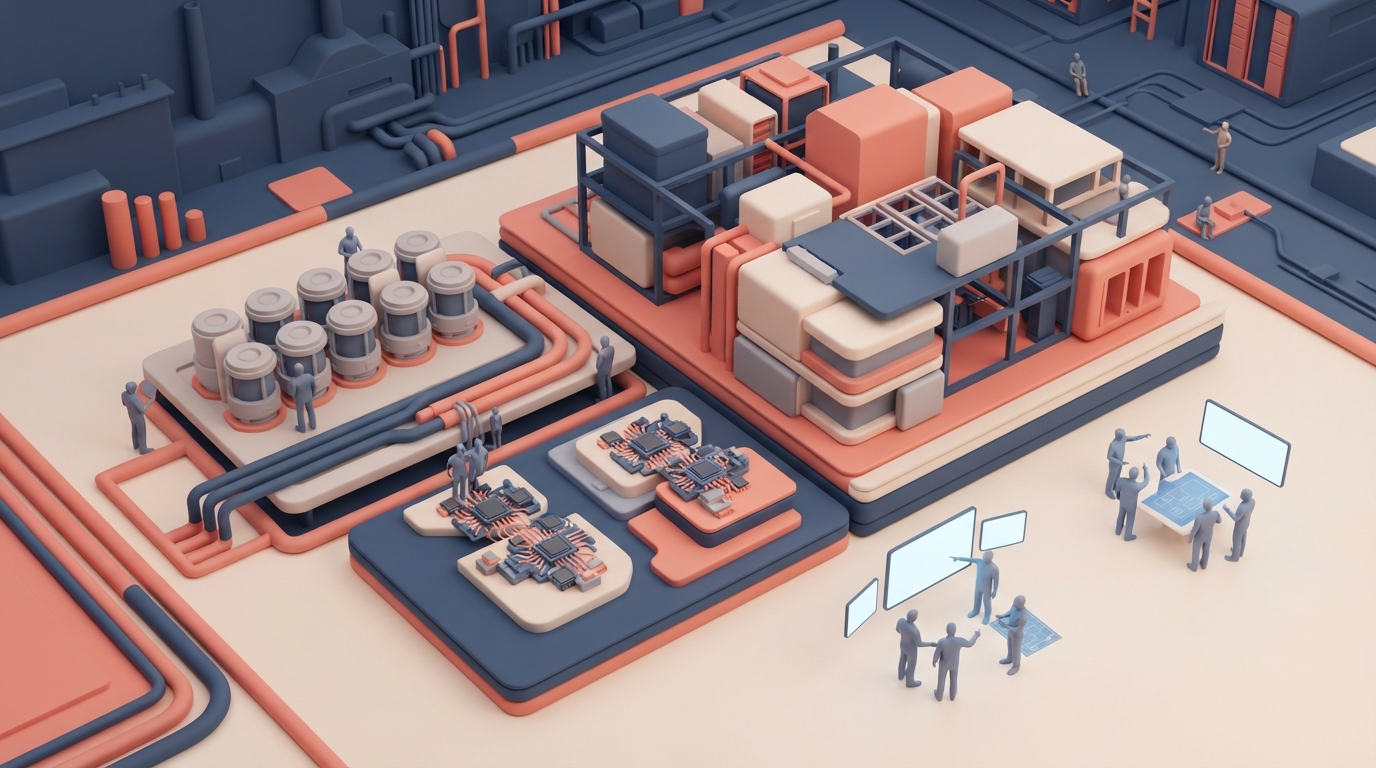
At the 2026 Hon Hai Tech Day, James Yao of Visionbay.ai and Albert Liu of Kneron discussed escalating power constraints and compute allocation. Yao emphasized that AI data center (AIDC) deployment requires strict supply chain synchronization—securing power and land/shell infrastructure before GPU installation to avoid major capital losses. He observed a rapid surge in rack power density, prompting Visionbay to adopt liquid cooling and use token-per-watt as a key efficiency metric; NVIDIA also plans to support megawatt-level racks via 800VDC from 2027. Liu argued from the chip perspective that adding energy-efficient NPUs at the edge can offload cloud workloads, claiming significant power reductions when pairing NPUs with lower-tier processors, though specific testing data was omitted in the interview. Regarding hybrid compute deployment, Yao observed that enterprises typically retain proof-of-concept and sensitive data on-premises for compliance, while routing heavier training and inference to the cloud.
Key takeaways
- Visionbay's James Yao emphasized staging AIDC deployment by securing power and shells before GPUs, adopting liquid cooling and token-per-watt metrics.
- Kneron's Albert Liu proposed edge NPUs to reduce cloud power consumption, though detailed test data for its claimed GPU substitution were not provided.
- Enterprises and governments are adopting hybrid architectures, retaining sensitive workflows on-premises for compliance while leveraging cloud resources for heavy workloads.
Source:科技報橘 Read the original ↗
Prepared, checked and automatically published by AI; not individually reviewed by a human. Translation checked by AI.